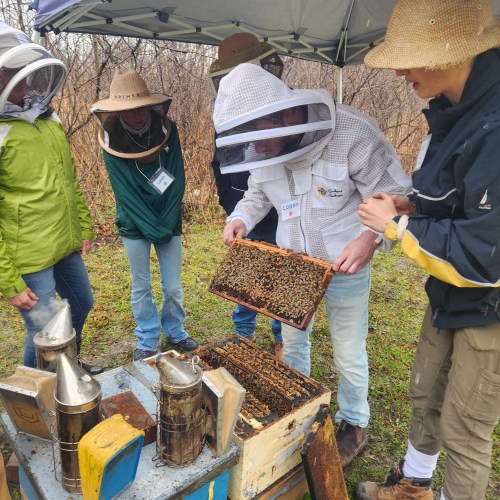
Like our bees, we have had a busy summer! We had approximately one tour a day through the spring, summer, and early fall. It is always great to see the excitement from tour participants as we delve into the interesting facets of honey bee biology and conduct our hive demonstration from our on-site apiary. Not only do these tours serve as a gateway for education of honey bees and their role in pollination, but they also allow us to generate revenue from tour fees and honey sales. Every cent we earn contributes to the success of our program.
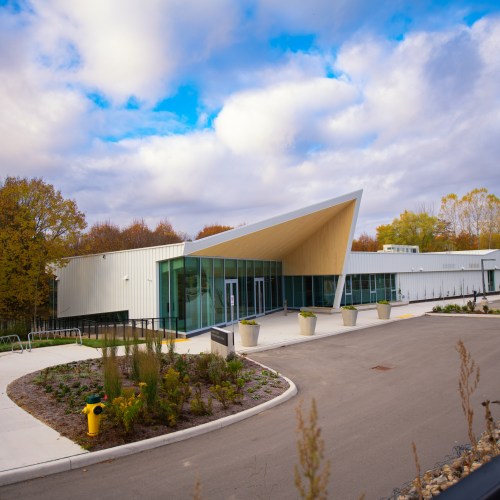
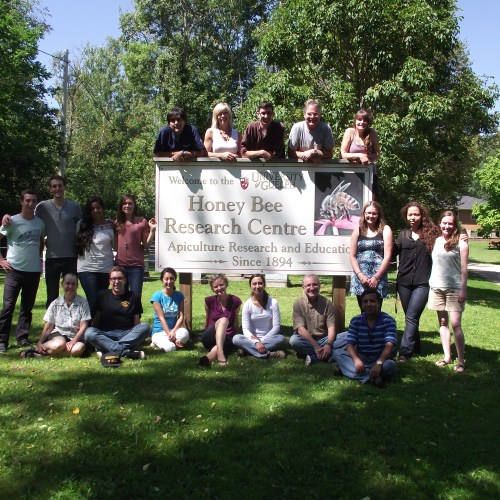
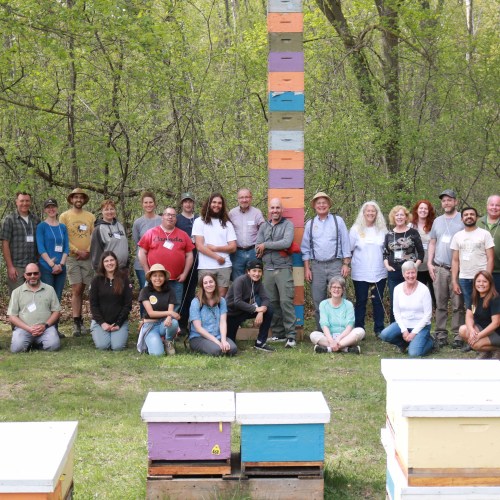
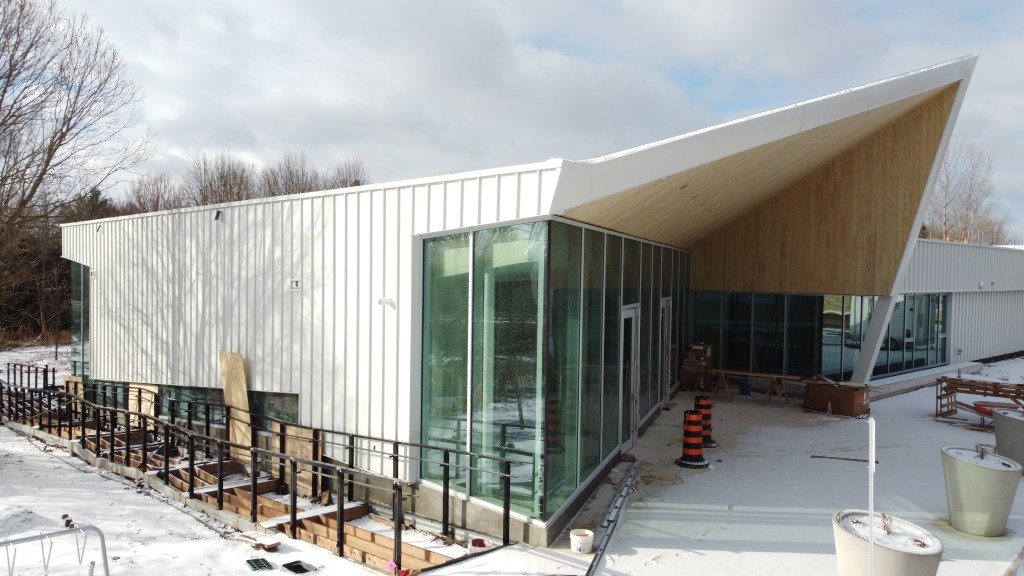
This July, our team of staff, students, and volunteers were all able to gather for our very own tour of our new site. The photo above, shows some team members in the new classroom on July 26th. At that point, the exterior of the building was closed in.
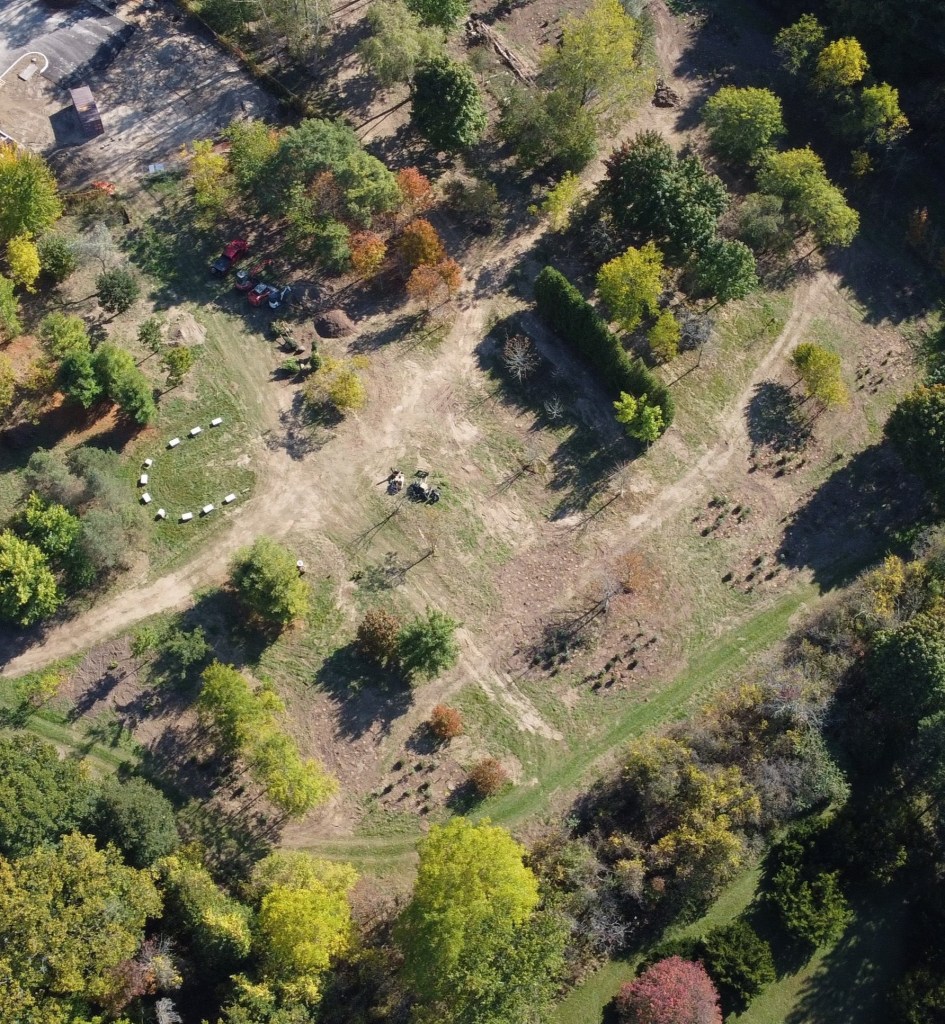
In August, we rented a skid-steer with a mulching head to mow through all the buckthorn and branches that Paul had cut down last winter. Clearing the land in this way allowed us to find and fill the 163 holes that had been left behind when trees were dug out of the former tree nursery.
In September and October, the landscape contractors planted approximately 60 large caliper trees and hundreds of smaller trees and shrubs in tree planting modules. The plant species selected, benefit pollinators. This will become the Bee Tree Forest!
We are expecting to move into the new building starting in late January.
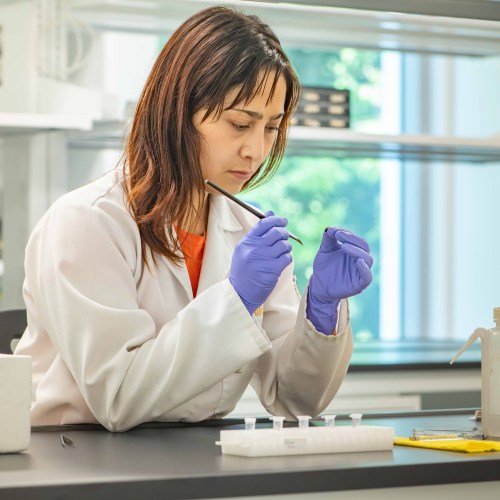
Throughout the summer, Ph.D. student, Wissarut “Aon” Sukhaket, has been conducting experiments on his project investigating the effects of different prebiotic and probiotic protein diets on Nosema disease. Observations have been done on the foraging behaviour of bees treated with different diets and on the strength of colonies treated with different diets.
Our honey harvest was successful, yet again, with a yield of approximately 17,400 lbs of honey collected from all 13 of our apiaries across Ontario.