The University of Guelph Honey Bee Research Centre conducts research on honey bee health, hive productivity and bee breeding.




Our Goal
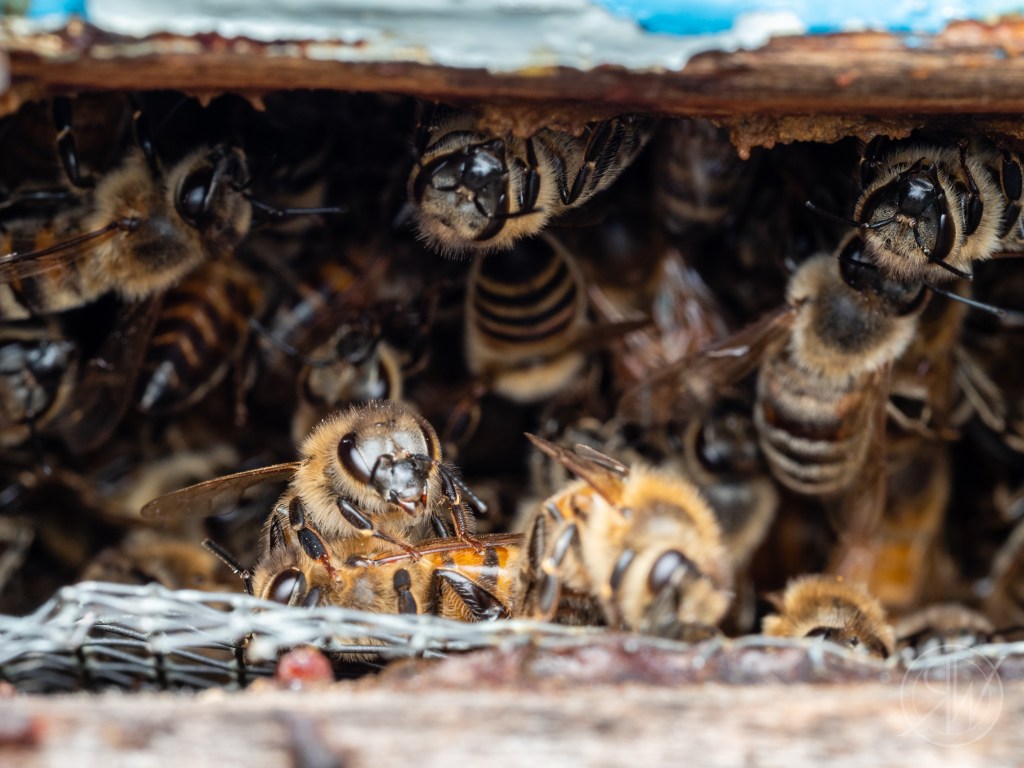
Our goal is to find sustainable methods of disease prevention and solutions for keeping honey bees healthy. Recent and ongoing research projects include honey bee breeding for varroa mite resistance, developing alternative treatment methods for Varroa mites, determining the effects of agricultural pesticides on honey bees, and exploring the benefits of probiotics for honey bee health.
Our Infrastructure
The HBRC includes a laboratory for molecular biology studies on campus in the Bovey building. The apiculture facilities are located near campus at the Luckevich Pinchin Honey Bee Research Centre, 460 Stone Road East, adjacent to the Arboretum. We manage over 300 colonies of honey bees for research and education purposes.

Honey Bee Mortality
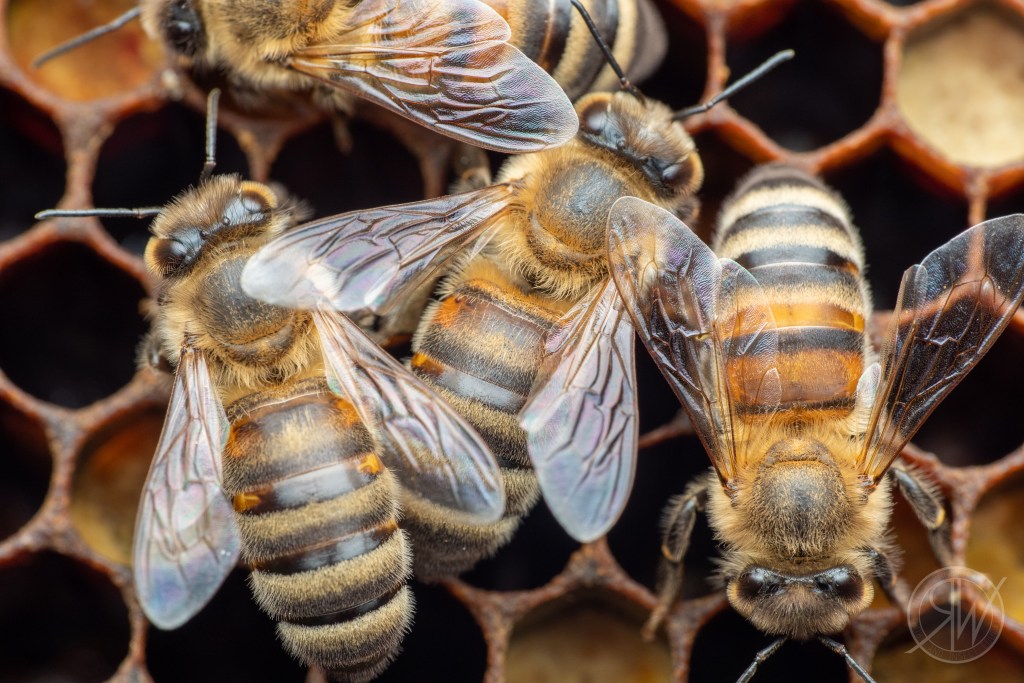
The current research in our lab is a response to the high mortality rates of honey bee colonies. On average, more than one third of the honey bee colonies in Ontario and Canada died over the past 13 winters. Factors that affect bee health include pests, diseases, parasites, pesticides, climate change, and land use practices
Featured Publications
- De la Mora, A., Goodwin, P. H., Morfin, N., Petukhova, T., & Guzman-Novoa, E. (2025). Diversity of Potential Resistance Mechanisms in Honey Bees (Apis mellifera) Selected for Low Population Growth of the Parasitic Mite, Varroa destructor. Insects, 16(4), Article 4. https://doi.org/10.3390/insects16040385
- De la Mora, A., Morfin, N., Espinosa-Montaño, L. G., Medina-Flores, C. A., & Guzman-Novoa, E. (2021). The mite Varroa destructor lowers the stinging response threshold of honey bees (Apis mellifera). Journal of Apicultural Research, 63(1), 1–5. https://doi.org/10.1080/00218839.2021.1959754
- Morfin, N., Anguiano-Baez, R., & Guzman-Novoa, E. (2021). Honey Bee (Apis mellifera) Immunity. The Veterinary Clinics of North America. Food Animal Practice, 37(3), 521–533. https://doi.org/10.1016/J.CVFA.2021.06.007
- Morfin, N., Gashout, H.A., Macías-Macías, J.O. et al. Detection, replication and quantification of deformed wing virus-A, deformed wing virus-B, and black queen cell virus in the endemic stingless bee, Melipona colimana, from Jalisco, Mexico. Int J Trop Insect Sci 41, 1285–1292 (2021). https://doi.org/10.1007/s42690-020-00320-7
- Borges, Daniel; Guzman-Novoa, Ernesto; Goodwin, Paul H. 2021. “Effects of Prebiotics and Probiotics on Honey Bees (Apis mellifera) Infected with the Microsporidian Parasite Nosema ceranae” Microorganisms 9, no. 3: 481. https://doi.org/10.3390/microorganisms9030481
- De la Mora, Alvaro; Emsen, Berna; Morfin, Nuria; Borges, Daniel; Eccles, Les; Kelly, Paul G.; Goodwin, Paul H.; Guzman-Novoa, Ernesto. 2020. “Selective Breeding for Low and High Varroa destructor Growth in Honey Bee (Apis mellifera) Colonies: Initial Results of Two Generations” Insects 11, no. 12: 864. https://doi.org/10.3390/insects11120864
- Gashout, H.A., Guzman-Novoa, E. & Goodwin, P.H. Synthetic and natural acaricides impair hygienic and foraging behaviors of honey bees. Apidologie 51, 1155–1165 (2020). https://doi.org/10.1007/s13592-020-00793-y
- Guzman-Novoa, E., Morfin, N., De la Mora, A., Macías-Macías, J. O., Tapia-González, J. M., Contreras-Escareño, F., Medina-Flores, C. A., Correa-Benítez, A., & Quezada-Euán, J. J. G. (2020). The Process and Outcome of the Africanization of Honey Bees in Mexico: Lessons and Future Directions. Frontiers in Ecology and Evolution, 8. https://doi.org/10.3389/fevo.2020.608091
- Emsen, Berna; De la Mora, Alvaro; Lacey, Brian; Eccles, Les; Kelly, Paul G.; Medina-Flores, Carlos A.; Petukhova, Tatiana; Morfin, Nuria; Guzman-Novoa, Ernesto. 2020. “Seasonality of Nosema ceranae Infections and Their Relationship with Honey Bee Populations, Food Stores, and Survivorship in a North American Region” Vet. Sci. 7, no. 3: 131. https://doi.org/10.3390/vetsci7030131
- Morfin, N., Fillier, T. A., Pham, T. H., Goodwin, P. H., Thomas, R. H., & Guzman-Novoa, E. (2021). First insights into the honey bee (Apis mellifera) brain lipidome and its neonicotinoid-induced alterations associated with reduced self-grooming behavior. Journal of Advanced Research. https://doi.org/10.1016/j.jare.2021.08.007
- Morfin, N., Given, K., Evans, M. et al. Grooming behavior and gene expression of the Indiana “mite-biter” honey bee stock. Apidologie 51, 267–275 (2020). https://doi.org/10.1007/s13592-019-00710-y
- Morfin, N., Espinosa-Montaño, L.G. & Guzman-Novoa, E. A direct assay to assess self-grooming behavior in honey bees (Apis mellifera L.). Apidologie 51, 892–897 (2020). https://doi.org/10.1007/s13592-020-00769-y
- Guzman-Novoa, E., Emsen, B., Unger, P., Espinosa-Montaño, L. G., & Petukhova, T. (2012). Genotypic variability and relationships between mite infestation levels, mite damage, grooming intensity, and removal of Varroa destructor mites in selected strains of worker honey bees (Apis mellifera L.). Journal of invertebrate pathology, 110(3), 314-320. https://doi.org/10.1016/j.jip.2012.03.020
For more information about our publications, visit here.