
There are many insects and insect nests in Ontario that are commonly confused with honey bees and their hives. This includes over 400 species of bees and numerous species of wasps, hornets, and hoverflies. Like honey bees, some of these insects are social and live in colonies, e.g. bumble bees and paper wasps. Others are solitary or live in communities with varying degrees of social behaviour, e.g. carpenter bees and sweat bees. From carpenter bees, which bore holes in wood to create their nests to paper wasps, which construct large structures out of chewed up plant fibers, the nests of these animals can be found in a variety of locations and constructed of a range of materials.
Many of these insects also perform important roles in the pollination of both wild and cultivated plants, although they are not managed for pollination quite as frequently as honey bees. In fact, many species of bee have adapted to specialize in pollinating certain plants and thus may be better suited than honey bees for their pollination. For example, the eastern cucurbit bee is an excellent pollinator of squash, which it relies on for pollen and nectar. Wasps, hornets, and hoverflies are also important pollinators for many ecosystems. Additionally, wasps and hornets prey on other insects, keeping their populations in check.
Bumble Bees

_-_Guelph,_Ontario_01.jpg)
Bumble bees are large fuzzy flying insects from the genus Bombus. They have smooth stingers, which means that they can sting multiple times. There are 16 species of bumble bees in Ontario. Like honey bees, bumble bees are social insects that live in colonies. Unlike honey bees, bumble bee colonies only last through the warm months of the year. Bumble bee colonies begin in the spring when a queen emerges from solitary hibernation. She will search for a hole in the ground, such as an old chipmunk burrow, where she makes use of the existing nest material. She builds cups out of wax in which she subsequently lays eggs. As the colony grows, more cups will be built, and some will be used for honey and pollen storage. In late summer, the bumble bee colony produces new queens and male bees. Mating occurs on the ground. The colony disperses in the fall and the new queens find a protected location to hibernate over the winter. The workers and drones do not survive the winter.
Bumble bees are very good pollinators. They use a technique called buzz pollination, to shake pollen loose from the stamen of flowers. Tomato flowers require buzz pollination. Bumble bees are used to pollinate plants grown in greenhouses such as tomatoes, cucumbers, and peppers. They do just fine inside the greenhouse, unlike honey bees, who try to escape.
Generally speaking, large bees pollinate large flowers and small bees pollinate smaller flowers. Bumble bee’s tongues are long enough to reach the nectaries of deep flowers, such as red clover. Bumble bees can fly in cooler temperatures than honey bees.
Sweat Bees
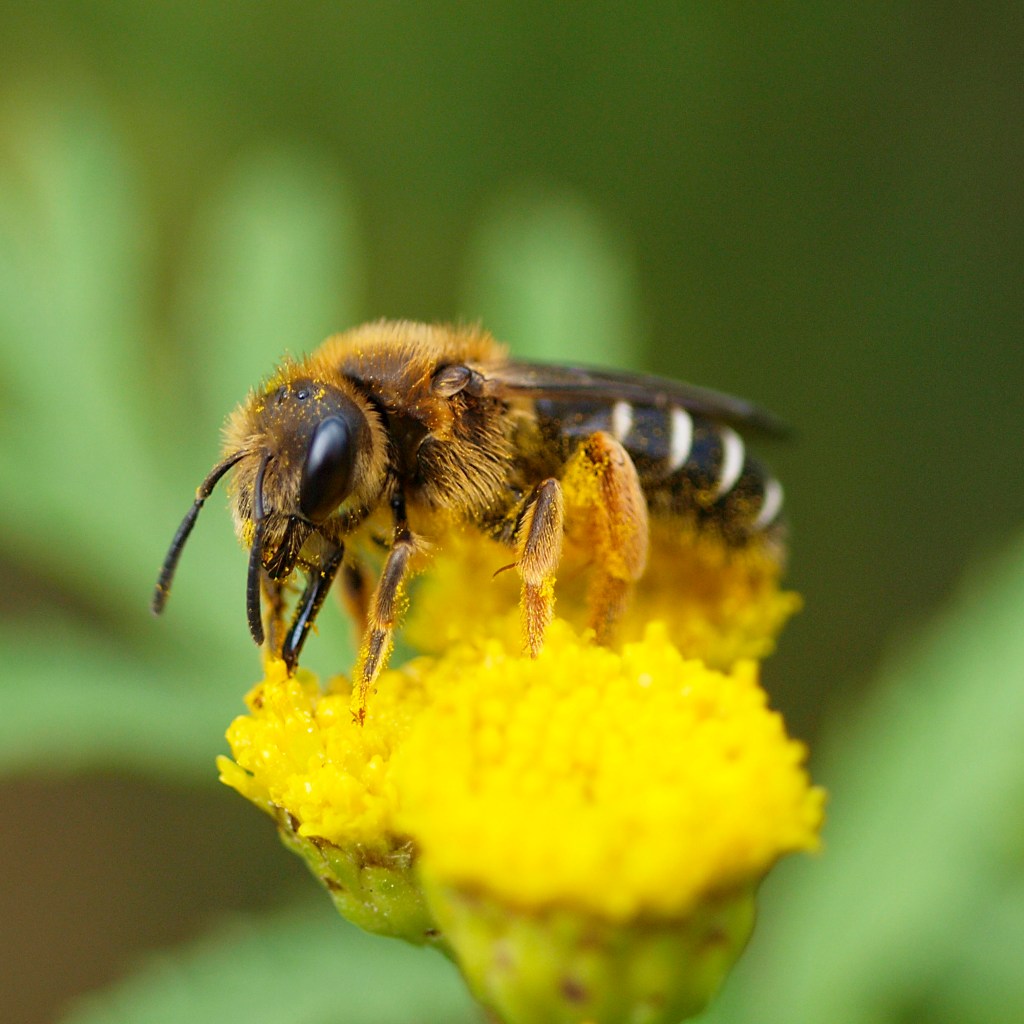

Males have a shiny green/brassy head and body and sometimes a black and yellow banded abdomen. They are ground nesting bees. Sweat bees are generalist foragers, like honey bees and bumble bees.
Squash and Gourd Bees
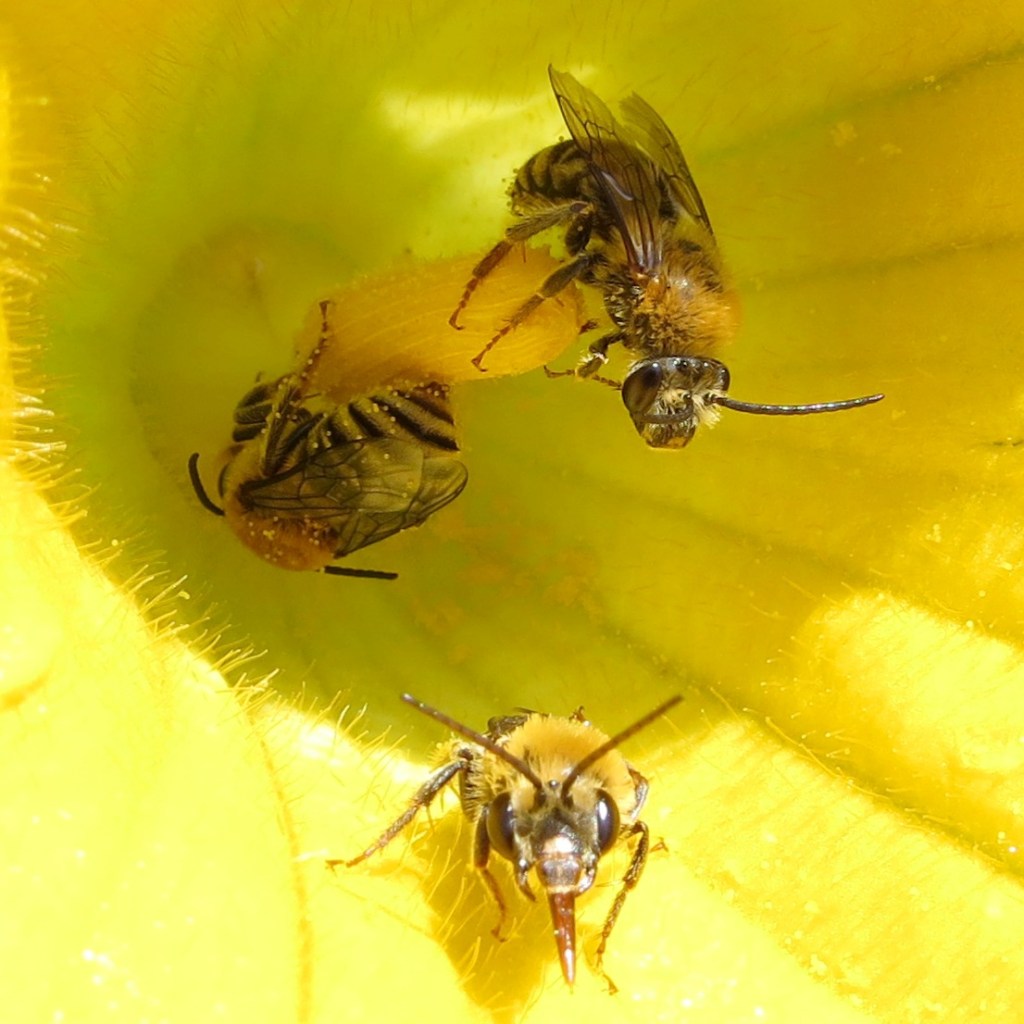

Specialist pollinators preferring squashes, gourdes and pumpkins. They are the approximate size of a honey bee and are ground nesting.
Carpenter Bees


Carpenter bees resemble bumble bees, but have shiny black abdomens. They construct their nests in tunnels that they excavate in unfinished wood. The entrance to the tunnel is a perfectly round hole. All solitary bees, like carpenter bees, raise their young in tunnels. Female bees collect nectar and pollen which they form into balls in the tunnels. An egg is laid on the pollen ball and then a partition is created before the process is repeated. Carpenter bees use sawdust to construct partitions. Other species use a variety of natural materials for partition construction. Solitary bees overwinter in the tunnels as pupae. Adults emerge in the spring.
Leafcutter Bees
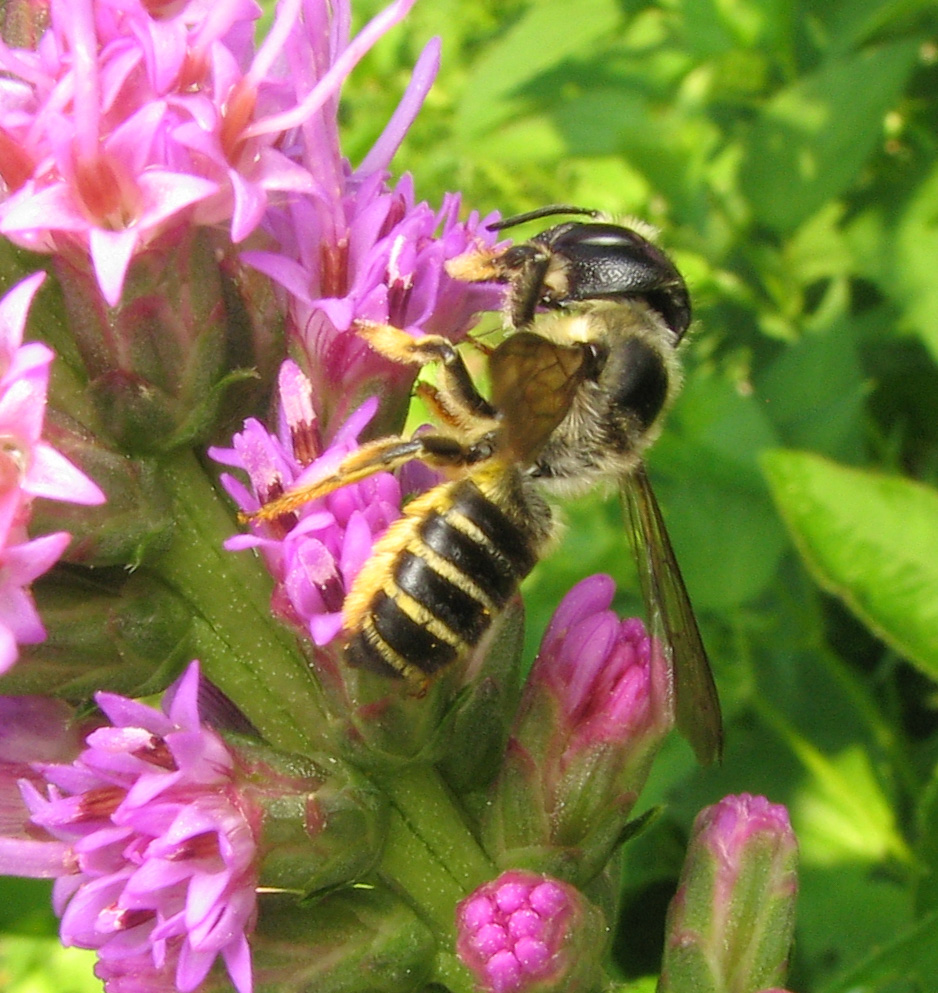

Leafcutter bees are solitary but gregarious. This means that females raise their young in close proximity to other females. As their name suggests, leafcutter bees cut pieces of leaves to create partitions. Leafcutter bees carry pollen underneath their abdomens on a distinctive patch of hair, unlike honey bees and bumble bees which use pollen baskets to carry pollen. Leafcutter bees are managed commercially for the pollination of alfalfa.
Wasps
.jpg)
Mud Dauber Wasp

_Nest_-_Kitchener,_Ontario_2018-04-24.jpg)
Mud Dauber Wasp Nest
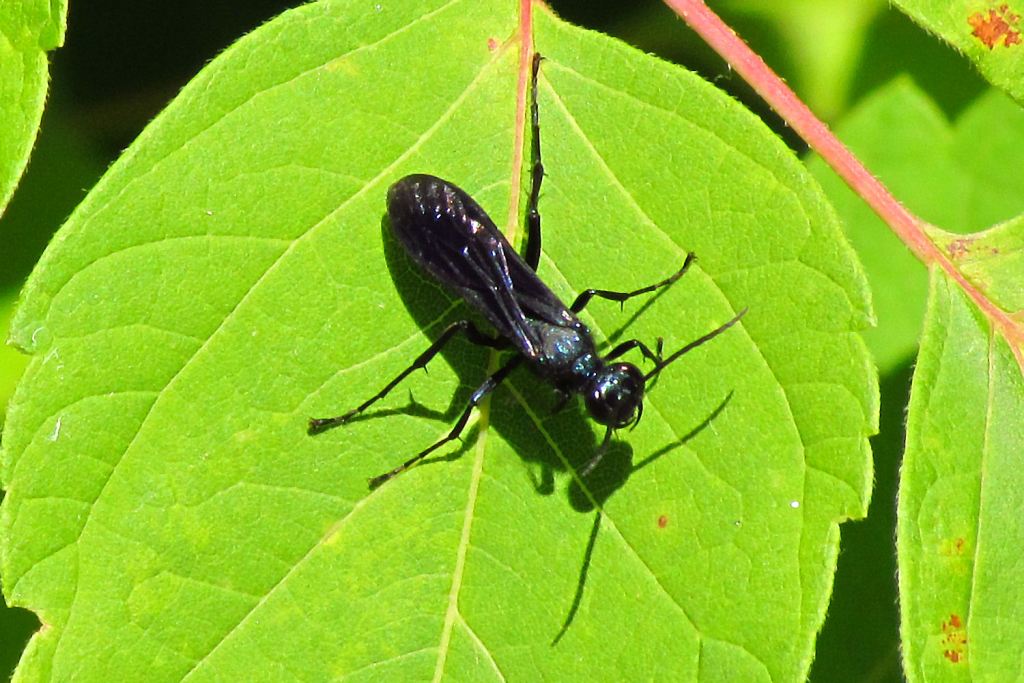
Wasps are a very diverse group of insects in the order, Hymenoptera. They often have less hair than bees and have very narrow waists. Like bumble bees, wasps have smooth stingers and can use them multiple times. Some species of wasps are parasitoidal, meaning that they lay their eggs inside other organisms, often other insects. This provides a place for the larvae to grow, and a meal as well. Many species of wasps are solitary and have similar lifecycle to solitary bees. They make their nests in holes in trees and woody stems. Other species use mud to construct their nests. Some species of wasps are social and live in colonies. The most common social wasp in Ontario is the yellowjacket wasp. They live in nests constructed out of paper that they make by chewing up wood and mixing it with their saliva. Only queens overwinter, and the colonies do not return to the same nest the next year.
Hornets
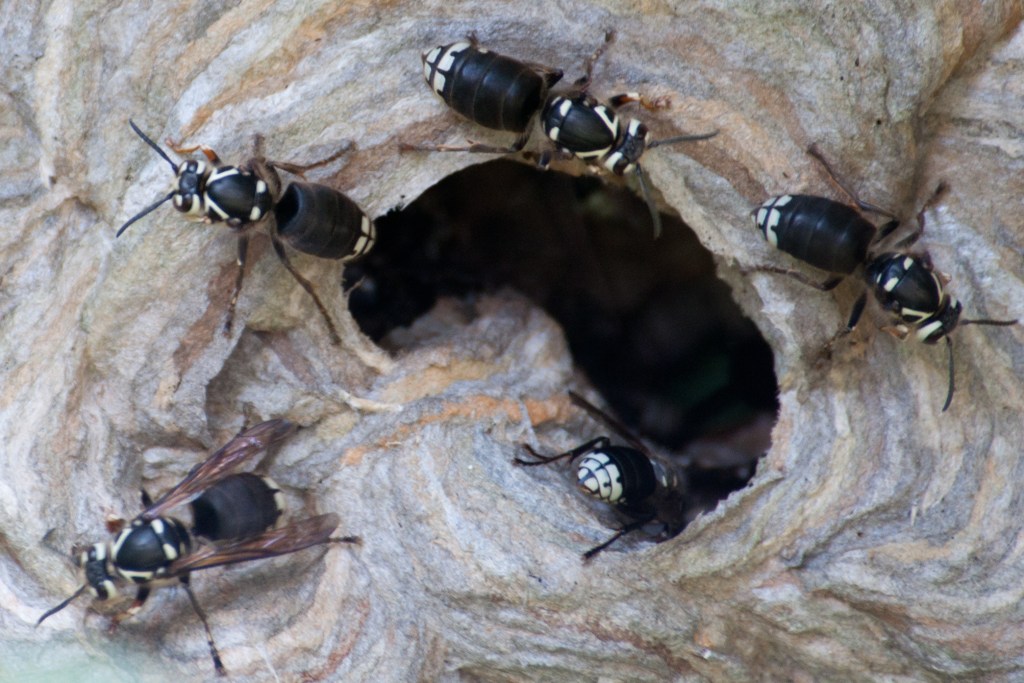
.jpg)
Bald-Faced Hornet
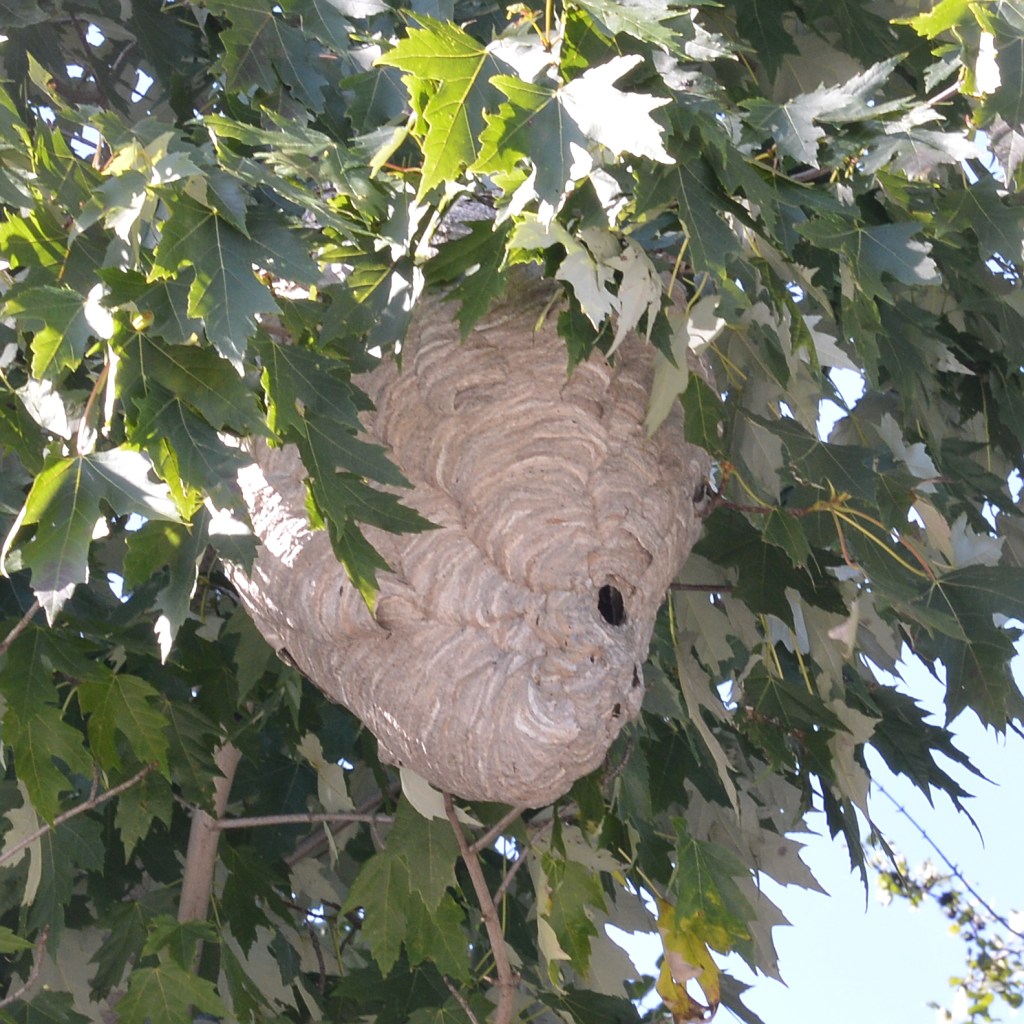
_Nest_-_Kitchener,_Ontario_2019-09-14_(01).jpg)
Bald-Faced Hornet Nest
Hornets are a group of social wasp species in the family Vespidae. The most common hornet species in Ontario is the bald-faced hornet. They are a large black and white striped hornet that live in paper nests similar to yellowjacket wasps.
Wasps and hornets are very important for the environment. In addition to being pollinators, wasps eat other insects that humans consider pests. Some wasp species are used as biological control agents in agriculture.
Hover Flies
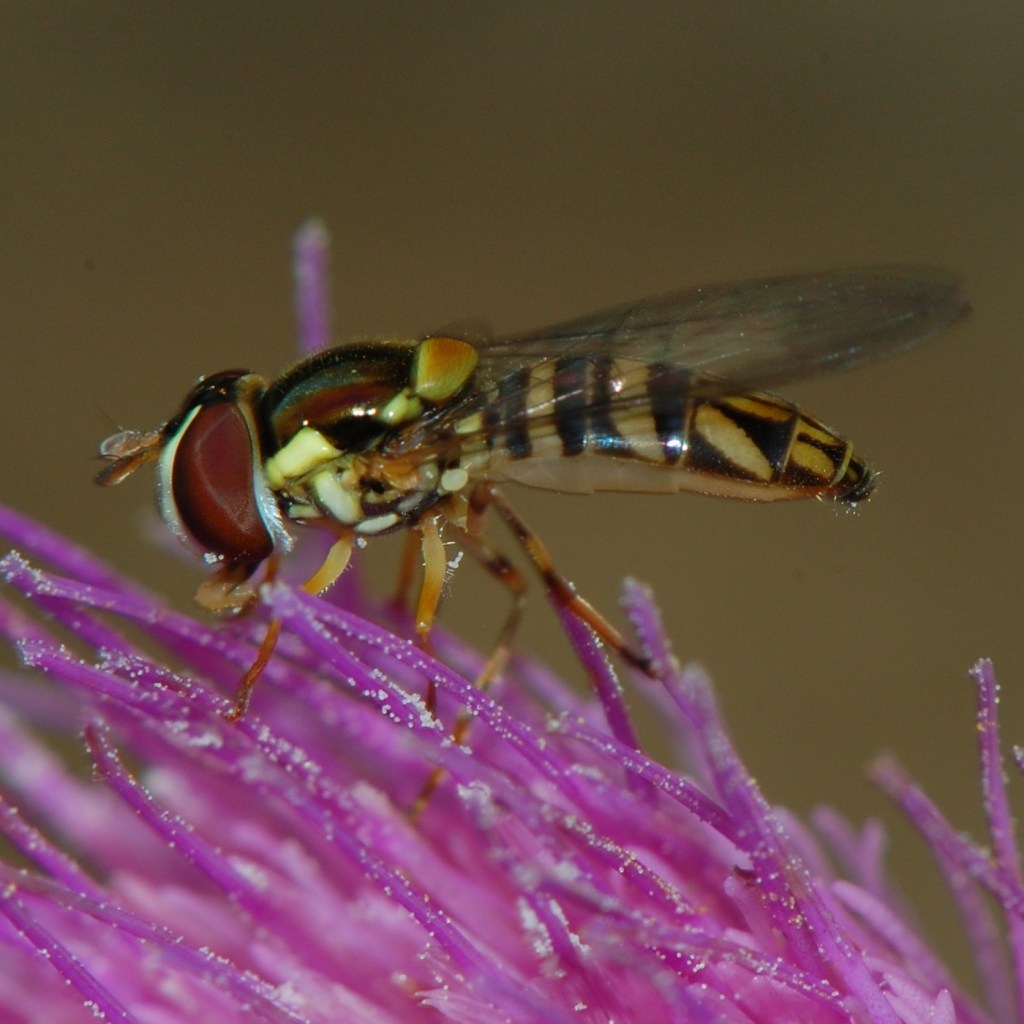

Hover flies are insects in the family Diptera. Hoverflies have evolved to mimic the striped pattern of honey bees and wasps. This means that they appear more dangerous than they are as flies are unable to sting. Some major differences between hoverflies and honey bees are thin, hairless legs, and only one pair of wings. Unlike honey bees, hoverflies have the ability to hover in the air. They are capable of pollinating some plants.
Identification Guide
| Type | Honey Bee (Apis mellifera) | Wasps and Hornets (Hymenoptera spp.) | Flies and hoverflies | Bumble bee (Bombus spp.) | Solitary Bees |
|---|---|---|---|---|---|
| Body Appearance | Usually thick-bodied with 3 distinct segments | Skinny body and narrow “waist” | No “waist” between thorax and abdomen | Thick bodied with distinct fuzzy abdomen, no discernable “waist” | Varies among different species, but generally smaller than bumble bees |
| Size | 12mm length | 10-25mm length | Variable | 13-25mm length | Variable |
| Wing appearance | Four wings | Four wings | 2 Wings | Variable | |
| Hair on body | Hair on body (usually) and eyes | Hairless (usually) | No hair on legs | Hair on body | Some species have hair |
| Antennae | Long slender antennae | Long antennae, elbowed | Short antennae very close together | Variable | |
| Leg Hair | Usually hairy legs | Long thin legs with spines | Thinner hairless legs, few spines | Hairy legs | Not always present |
| Eyes | Eyes on side of head | Eyes on side of head | Large eyes, forward facing | Eyes on side of head | Eyes on side of head |
| Stinging | Barbed stinger, stings only once then dies | Smooth stinger, can sting multiple times | Bites but does not sting | Smooth stinger can sting multiple times | Some sting, others are stingless |
| Pollinating | Collects pollen and nectar from flowers to pollinate | Collects nectar only from flowers | Pollinates some plants, e.g.: strawberries | Collects pollen and nectar from flowers to pollinate | Collects pollen and nectar to pollinate |